Bryan Johnson Review: Is Blueprint Protocol Worth It?
Program Rating:
0


Bryan Johnson Review: Is Blueprint Protocol Worth It?
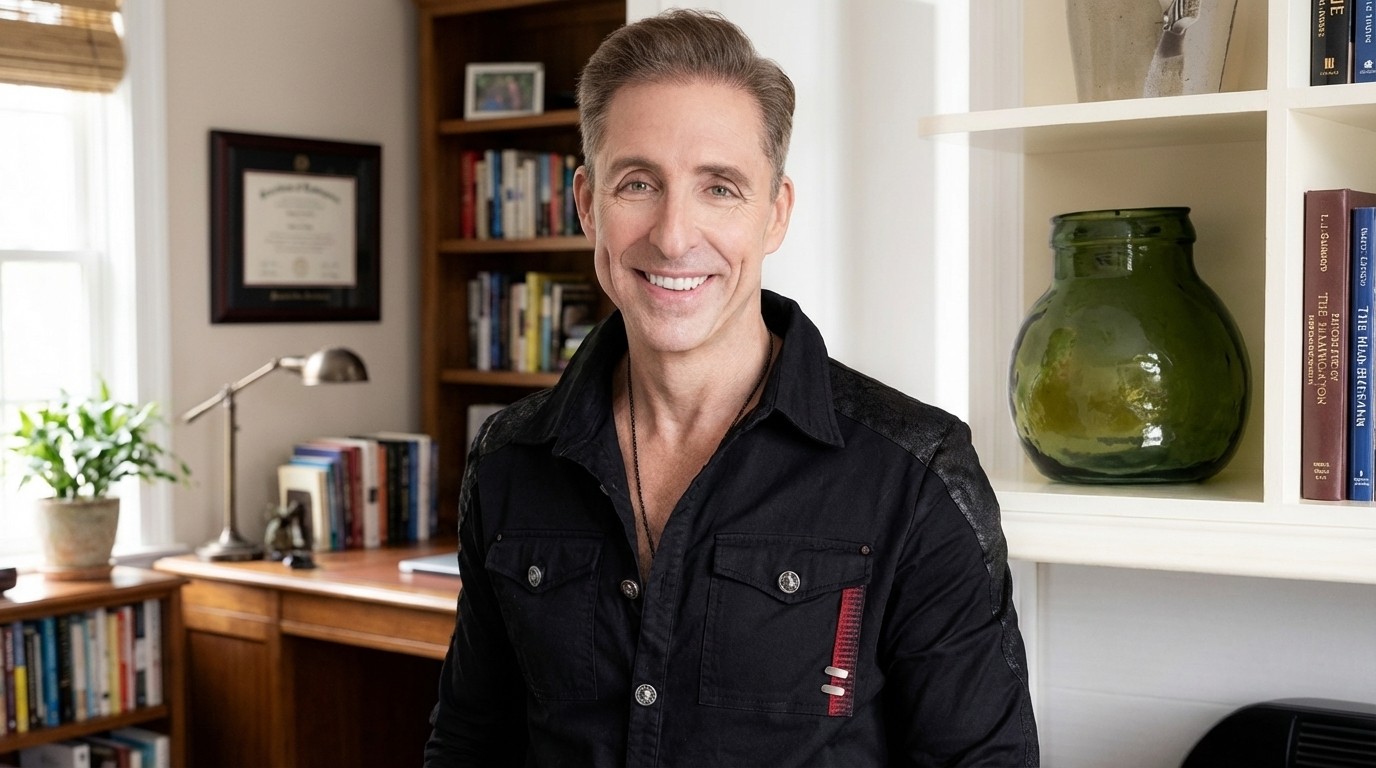
Bryan Johnson is the most extreme, most documented, and most contested figure in the modern longevity movement. A tech entrepreneur who sold Braintree to PayPal for $800 million, he reinvested himself as a living laboratory — spending over $2 million per year attempting to reverse his biological age, publicly documenting every protocol and biomarker, and commercializing his findings into a supplement and nutrition line called Blueprint. He has also received his teenage son's blood plasma intravenously, announced a personal religion called "Don't Die," publicly considered closing his own company, and been formally accused of fraud by a credentialed liver specialist. This review covers the full documented record with the honest investigation angle it warrants.
Who Is Bryan Johnson?
Johnson holds a BS in International Studies from Brigham Young University and an MBA from the University of Chicago Booth School of Business. He has no medical, scientific, or clinical credentials of any kind. His authority in the longevity space derives from his wealth, his willingness to conduct extreme self-experimentation at documented scale, and his commitment to measurement — tracking over 70 organ systems through biomarker testing with a team of 30+ medical professionals interpreting his data and adjusting his protocol.
His professional trajectory: founder of Braintree (sold to PayPal for $800 million in 2013), founder of OS Fund (a venture capital firm focused on science and technology), and founder of Kernel (a brain activity recording device company). In 2021 he launched Project Blueprint — his systematic attempt to reverse aging across every organ system — and began publicly documenting the protocols and outcomes.
In 2025 he publicly stated he was considering selling or closing Blueprint, describing it as a "pain-in-the-ass company" whose commercial demands conflicted with his philosophical mission. He later chose to expand instead — recruiting new executive leadership and raising investment to build Blueprint into clinics and certification programs.
He is the most data-documented self-experimenter in the history of consumer health — and the most credentialed person in this review by exactly zero clinical or scientific qualifications.
What Does Blueprint Include?
Blueprint's consumer-facing offerings have evolved significantly since launch.
Blueprint Supplement Stack: A commercially available supplement line positioned as the distilled consumer version of Johnson's personal protocol — including a Longevity Mix, Essential Softgels, NAC + Ginger + Curcumin, Omega-3s, and other formulations. The full Blueprint Stack costs $361/month for a 90-day nutrition cycle — approximately $12/day, covering roughly 400 calories of breakfast-level nutritional intake.
Blueprint Food Products: A growing line of Blueprint-branded food products including extra virgin olive oil, matcha, and meal components. The matcha product drew documented community criticism — 30 servings at $40, compared to approximately $1 per serving at standard retail.
Don't Die Protocol (protocol.bryanjohnson.com): Johnson's most recently structured protocol framework — described as "an experimental clinical research project" with results to be periodically published in peer-reviewed journals. That framing — self-described as experimental clinical research, not an established clinical protocol — is an important calibration signal for prospective participants.
Blueprint Clinics and Certification Programs: As of mid-2025, Johnson announced expansion into physical clinics and practitioner certification programs. These are nascent at time of research.
Free Open-Source Protocol: Johnson's full personal protocol — diet, supplements, exercise, sleep, testing, and biomarker tracking — is publicly documented and open-source at protocol.bryanjohnson.com at no cost. The commercial products are optional; the information is free.
What the Protocol Actually Involves
The scope of Johnson's personal protocol is important context for evaluating what the commercial Blueprint products represent.
Johnson's full $2 million/year personal protocol includes: a strict 1,977-calorie vegan-leaning diet consumed in a 6–8 hour eating window; 100+ daily supplements; monitoring of 70+ organ systems; regular MRIs, ultrasounds, and specialized imaging; nightly erection tracking; continuous glucose monitoring; cardiovascular testing including VO2 max; dermatological laser treatments; photobiomodulation; electrical muscle stimulation; and biofeedback protocols.
The plasma exchange: in 2023, Johnson participated in a three-generation plasma exchange at a Texas spa — receiving blood plasma from his 17-year-old son while his own plasma was injected into his 70-year-old father. After evaluating his biomarkers, he concluded there were "no benefits detected" and discontinued young plasma exchange protocols. The FDA had already warned in 2019 that young plasma transfusions for age-related disease have no proven clinical benefit and carry documented risks.
The commercial Blueprint supplement stack at $361/month represents a small fraction of his personal protocol. The gap between Johnson's $2 million/year comprehensive self-experiment and the consumer product line positioned as its distilled output is the most important factual context for any prospective buyer.
Documented Positive Outcomes
Johnson's self-reported biomarker outcomes are the most extensively documented self-n=1 longevity data set in public record — and some of the results are genuinely striking. After two years of the full Blueprint protocol, Johnson's team reports his rate of biological aging has slowed by the equivalent of 31 years — measured across multiple biological age testing methodologies. An independent trial conducted by journalist Nick Tucker following one month on the Blueprint protocol documented a biological age reversal from 36 to 33, a 20-pound body weight reduction, a 77% reduction in triglycerides, and a 27% reduction in LDL cholesterol.
His biomarker tracking across 70+ organ systems with a team of 30+ medical professionals represents the most rigorous self-measurement protocol in the consumer biohacking space by a significant margin. New Scientist published a substantive analysis in 2025 identifying specific scientific insights from Johnson's project that are genuinely contributing to longevity science — noting that his willingness to test interventions, measure outcomes, and publicly abandon protocols that don't work generates real-world data even without RCT methodology.
Johnson's protocol transparency — full ingredient lists, full biomarker data, full protocol documentation published openly — is a genuine positive signal in a space where practitioners routinely obscure the commercial underpinnings of their recommendations. His community includes documented multi-year protocol followers who report meaningful improvements in metabolic markers, sleep quality, and subjective energy.
Complaints and Concerns
The Fraud Accusation and the Evidence Gap
In March 2025, Dr. Cyriac Abby Philips — a Kerala-based hepatologist known on social media as "The Liver Doc" — formally accused Johnson of fraud in a widely shared post, comparing him to Elizabeth Holmes and Belle Gibson, and characterizing Blueprint supplements as "overpriced snake oil with no real clinical backing." Johnson's response dismissed the accusation without directly engaging its substance: "Cyriac, why are you so angry? Who hurt you?" — and stated that Blueprint supplements contain "nutrients with independent and robust scientific evidence" without providing the specific clinical studies validating his claims.
The American Council on Science and Health published a 2025 analysis titled "Longevity or Marketing?" — concluding that many of Johnson's longevity claims rest on self-reported data from a single-person experiment, that n=1 self-experimentation does not constitute clinical evidence by any standard definition, and that the commercial supplement products cannot produce comparable outcomes in the absence of the comprehensive testing and intervention ecosystem driving his personal results.
Reddit's Blueprint community itself documented that Blueprint's trial data — collected from thousands of supplement users — has not been published in peer-reviewed journals despite the data being available and community members explicitly requesting publication. Johnson's protocol website describes the program as "an experimental clinical research project" whose results will be "periodically published in peer-reviewed journals" — but as of early 2026, substantive peer-reviewed publication of Blueprint user outcome data has not occurred.
The Blood Plasma Controversy
The documented plasma exchange — in which Johnson had his 17-year-old son give a liter of blood at a Texas spa and then received that plasma himself — generated sustained media criticism from Vanity Fair and Bloomberg. Johnson's own reported outcome — "no benefits detected" — is on the public record: he ran the experiment, measured the results, found no benefit, and stopped. The FDA had already warned in 2019 that young plasma transfusions carry no proven clinical benefit and documented risks. The episode reflects both Johnson's willingness to self-experiment at the outer edge of available protocols and his willingness to publicly abandon protocols that don't work.
Blueprint Company Financial Uncertainty
In July 2025, Johnson told Wired he was "so close to either shutting it down or selling it" — describing Blueprint as a "pain-in-the-ass company." Business Insider reported the company was missing its break-even point by at least $1 million per month at the time. Johnson later chose to expand. The documented financial instability is relevant for consumers considering annual supplement subscriptions or multi-month commitments to a product line whose organizational continuity has been publicly questioned by its own founder.
The "Don't Die" Religious Branding
In 2025, Johnson launched "Don't Die" — described as a personal religion or philosophical movement centered on longevity as a supreme value and the rejection of death as inevitable. Critics have characterized this as marketing performance; supporters have characterized it as genuine philosophical commitment. The consumer protection question is whether the "Don't Die" brand positioning — used commercially for supplements and clinics — creates emotional marketing pressure that goes beyond standard health product promotion.
Premium Pricing vs Open-Source Protocol
The full Blueprint protocol is publicly documented at no cost. A Reddit community analysis documented that the supplement ingredients can be sourced separately for approximately 40–60% less than Blueprint's retail pricing. Johnson's own framing — that Blueprint pricing reflects manufacturing quality, third-party testing, and convenience rather than proprietary formulas — is honest. The premium over commodity ingredient pricing remains substantial.
Cost Breakdown
Blueprint Supplement Stack (full): $361/month
Individual Blueprint supplements: $49–$57/month per product
Blueprint food products: Variable; matcha $40/30 servings
Blueprint Clinics: Expanding; pricing not yet publicly established at time of research
Don't Die Protocol (full personal protocol documentation): Free at protocol.bryanjohnson.com
Johnson's personal $2 million/year protocol: Not commercially available
Pros and Cons
Pros:
Most extensively documented self-experimentation longevity data set in the consumer health space — 70+ organ systems tracked, 30+ medical professionals on his team, full biomarker transparency publicly documented
Full protocol open-sourced at no cost — the information framework is free; commercial products are optional
Publicly abandoned protocols that didn't work (plasma exchange) with full data disclosure — a genuine intellectual honesty signal uncommon in the commercial health space
New Scientist acknowledged real scientific contribution from his self-experimentation to longevity science broadly
Third-party tested supplements with full ingredient transparency — no proprietary blends or hidden formulas
Documented favorable biomarker outcomes in both Johnson and independent trial participants
Cons:
No scientific or medical credentials of any kind — authority derived entirely from wealth, scale of self-experimentation, and measurement infrastructure
Fraud accusations from credentialed hepatologist Dr. Cyriac Abby Philips — comparing Johnson to Elizabeth Holmes and Belle Gibson, characterizing supplements as "snake oil with no clinical backing" — not substantively refuted
n=1 self-experimentation does not constitute clinical evidence — ACSH analysis specifically documents that single-subject data from a $2 million/year comprehensive protocol cannot be generalized to consumers using only the commercial supplement component
Blueprint company financial instability documented publicly — founder considered closing or selling in 2025; missing break-even by $1 million/month at that time
Blueprint user outcome data has not been published in peer-reviewed journals despite community calls for publication
Premium pricing over commodity ingredient alternatives: full stack $361/month vs. estimated $150–$200/month sourced separately
Plasma exchange experiment — receiving blood plasma from a 17-year-old son at a Texas spa after the FDA had already warned against the procedure in 2019 — raises judgment questions that are relevant context
"Don't Die" religious branding adds an emotional marketing layer to commercial supplement and clinic positioning
Blueprint protocol addresses longevity optimization at the supplement, dietary, and behavioral layer; does not address cellular-level neurotoxin accumulation and membrane-level dysfunction that drive accelerated biological aging at the root
About

Independent reviews of online health coaching programs — no paid placements, no agendas.
Explore Topics






Stay Up To Date!
Get new health program reviews free.
We publish new reviews weekly. No spam. Unsubscribe anytime.
Spotlight